

100% FREE CONSULTATION 1-800-935-3739

The Latest Distracted Driving Statistics

Distracted driving has been proven to be unsafe, but more and more drivers are driving distracted each year. Whether you are answering a text message while on the road or eating a cheeseburger in the car from your favorite fast food drive-through, you cannot drive safely without keeping your attention fully focused on the road ahead.

What is Distracted Driving?

Distracted driving is considered to be any activity that takes the driver’s attention away from driving, including talking on the phone, eating and drinking, turning to talk to people in the car, interacting with the entertainment system on the dash, or anything else that divides your attention between driving and something else.

Distracted driving is divided into three categories:

  • Visual, when the driver takes their eyes off the road.
  • Manual, when the driver takes their hands off the wheel.
  • Cognitive, when the driver takes their mind off of driving.

The scariest part of driving while distracted is just how significantly it diminishes the amount of time you have to react to changes on the road. Just sending or reading a text message can take your eyes off the road ahead for five seconds or more. If on the highway driving 60 mph, in those five seconds your car will cover the length of an entire football field all with your eyes on the phone. No one can drive safely unless they are driving without distractions. All types of distracted driving increase the risk of a serious car crash.

Current Distracted Driving Statistics

  • According to the National Highway Traffic Administration, in 2018 alone there were 2,841 deaths directly correlated to distracted driving. This means that every day approximately eight people die from car crashes involving a distracted driver.
  • Approximately 400,000 people nationwide are injured each year in distracted driving accidents.
  • According to the Texas Department of Transportation, in 2019 there were 103,312 car crashes involving distracted driving, with 356 Texans losing their lives.
  • 21% of teens involved a car accident are distracted by cell phones while driving.
  • Parents with young children are more likely to be distracted while driving when compared to adults driving without children in the car.
  • The majority of fatal crashes caused by distracted driving were caused by drivers under 30 years old using a cell phone at the time of the incident.
  • In a study conducted by the AAA Foundation for Traffic Safety, data indicated that drivers ages 19 to 24 were more likely to write a text while driving.
  • In that same study, 88% of young millennials admit to participating in some form of risky behavior (texting and driving, not stopping at a red light, speeding, etc.) while driving within the 30 days before the study was conducted.
  • The most common reasons that drivers engage in distracting driving by responding to a text message or e-mail include: the message being “important,” the message being work-related, the message being personal or social, or the driver needing directions.
  • Texting and driving doubles the chances of getting into any kind of accident. It triples the chances of being involved in a car accident where a vehicle leaves the road and crashes into a tree, hits a sign, or strikes another object off the road. Lastly, a driver who is texting while driving is seven times more likely to rear-end the car in front of them.

Weslaco Car Accident Attorneys

Car accidents caused by a distracted driver can be very frustrating, confusing, and stressful, but victims don’t have to handle it by themselves. By selecting knowledgeable legal representation, the injured won’t have to worry as much about their next steps. If you or a loved one has been injured or killed in a car accident caused by a distracted driver, contact the South Texas car accident lawyers at Ezequiel Reyna, Jr. Law Office today to discuss your case. There is limited time to act following a motor vehicle accident in Texas, so don’t delay.
What Are the Consequences of Speeding?

When driving in Texas, seeing cars go 10, 15, or 20 mph over the speed limit is a very common sight. When it comes to being a safe driver, speeding is a serious cause for concern. As a driver goes faster, they significantly reduce the amount of time they have to react to changes on the road ahead. Speed limits are put into place for a reason – each road has a different limit based on what area the road is in, the width of the road, how dense the traffic will be, etc. It has been proven that one of the main factors in fatal road accidents is speeding.

Speeding is so much more than just breaking the law – drivers who are speeding have greater potential to lose control of their vehicles. Drivers will also have significantly less time to react to perceived dangers in the road while speeding. These consequences, in turn, will increase the likelihood of that driver getting into a car accident. The severity of a car accident increases if one or more of the drivers was speeding before the crash occurred. Not to mention, speeding increases fuel consumption and cost.

Texas has two different types of speeding laws: a “basic speeding law” and “prima facie” speed limits. The basic speeding law prohibits drivers from driving faster than “reasonable and prudent under the circumstances then existing.” This means that drivers must maintain a safe speed the entire time they are on the road. That “safe speed” will depend on what road the driver is on and what the weather conditions are. For example, the speed limit on a Texas highway may be 60 miles per hour, which is totally appropriate on a bright, sunny day. If the road is wet or icy and it is very dark outside, driving 60 miles per hour may be dangerous and a violation of the basic speeding law.

Texas also has what are called “prima facie” speed limits. If you drive faster than the prima facie speed limit, that doesn’t necessarily mean you are guilty of breaking the law. You will still have the opportunity to prove in court that your speed was safe when driving. The judge or jury will determine if your speed was safe. Remember, though, that this does not mean you are allowed to speed down Texas roads because you will still get pulled over for going above the speed limit.

If you are pulled over for speeding and convicted in court, you will have to pay a fine and court costs. These vary by location in Texas but range from $130 to $300 depending on the speed by which the driver exceeded the speed limit. That is not the only fine a speeding driver may receive, however, as Texas does recognize speeding as potentially reckless driving. Reckless driving in Texas is a crime. If the driver of the vehicle drives with willful or wanton disregard for the safety of others or property, they are considered to be driving recklessly. These drivers do not care about the safety of those around them. If convicted, reckless drivers can face up to 30 days in jail and/or fines of up to $200.

Speeding goes hand in hand with serious car accidents; and, drivers who speed have the potential to be convicted of vehicular manslaughter or homicide if their speeding leads to the death of another person. A conviction this serious can carry significant prison time and thousands of dollars in fines, not to mention a lifetime of guilt from taking someone away from their family.

South Texas Car Accident Lawyers

Car accidents caused by a reckless, speeding driver can be absolutely devastating, but victims don’t have to handle them by themselves. By selecting knowledgeable legal representation, the injured won’t have to worry as much about their next steps. If you or a loved one has been injured or killed in a car accident, contact the Weslaco car accident lawyers at Ezequiel Reyna, Jr. Law Office today to discuss your case. There is limited time to act following a motor vehicle accident in Texas, so don’t delay.

Who Is at Fault When an Accident Involves a Pedestrian?

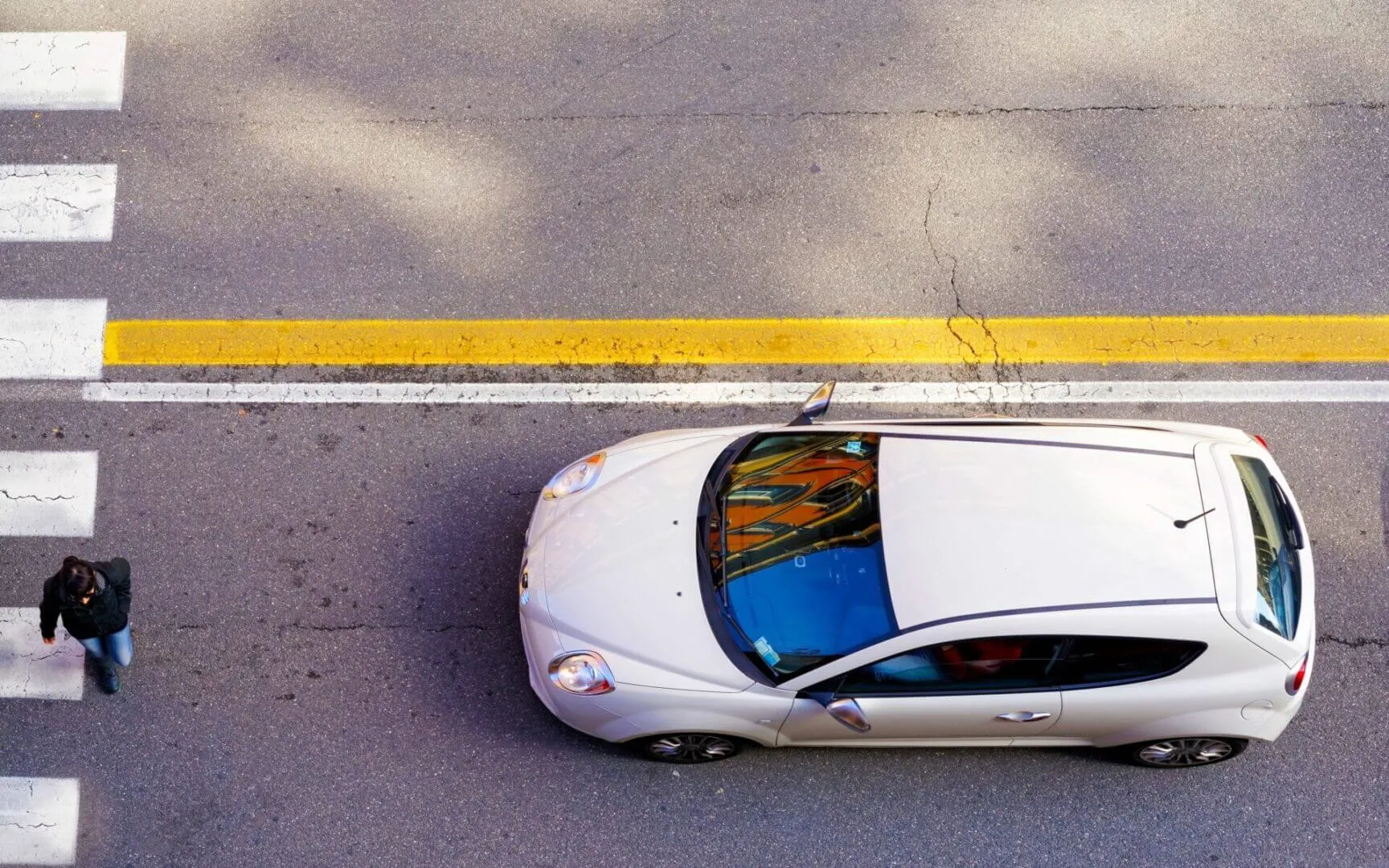
Most people think that in accidents between cars and pedestrians, the driver of the vehicle must be at fault. We were all taught that the pedestrian always has the right of way; however, from a legal standpoint that may not be true. In a car accident involving a pedestrian, the pedestrian can be at wholly or partially at fault.

How Is Fault Determined?

According to Texas Transportation Code, Title 7 §552, pedestrians do not have legal access to all roadways. In many parts of Texas, pedestrians are not allowed to walk across highways, bridges, and busy roads in high-traffic areas. Roads where pedestrians do have access contain rules, traffic signals, and signs that show pedestrians how and when to cross a street or intersection.

After a car accident that involves a pedestrian occurs, the police / emergency services should be called right away and medical attention should be given to anyone involved in the accident that was injured. The police will speak to all parties involved, including witnesses to the accident, and will put the information obtained into a police report. The police will note if the driver of the vehicle broke any relevant traffic laws and/or if the pedestrian had violated any city or state laws.

If the driver of the vehicle that hit the pedestrian is clearly at fault for the accident, the pedestrian should have no issues receiving fair compensation from the driver’s insurance carrier for the damages caused. The pedestrian may still need experienced legal representation to ensure the insurance company does not attempt to under-compensate them.

A pedestrian may be found partially or fully at fault for the car accident if they were:

  • Crossing an intersection when there is a “Do Not Walk” signal
  • Entering the street while intoxicated
  • Jaywalking (crossing the street outside of a crosswalk)
  • Walking in areas where pedestrian access is prohibited (freeways, bridges, etc.)

In some rare cases, the pedestrian may be fully at fault for the accident and they will not be able to recover compensation for damages that occurred. The driver could turn around and sue the pedestrian for compensation for their injuries and any damages to the vehicle.

Shared Fault in a Car Accident Involving a Pedestrian

Even if a pedestrian does some of the above behaviors to cause a car crash, the driver of the vehicle can also still be partially at fault. If the driver was speeding – even if the pedestrian was jaywalking – the driver would have been breaking a traffic law and would not have left enough time to react to the pedestrian walking into the road.

When both the driver and the pedestrian are found to be at fault, what happens? Texas courts may assign proportionate responsibility and compensation to both sides based on each side’s amount of responsibility. Whether you are the pedestrian or the driver, to receive partial or full compensation for your injuries, the court has to determine that you were less than 50% responsible for the accident.

South Texas Car Accident Attorneys

Car accidents involving a pedestrian can be complex and stressful situations. Whether you were the driver or the pedestrian, you should not have to handle this alone. By choosing experienced legal representation, the victim won’t have to worry about what steps to take to receive fair compensation for the accident. If you or a loved one has been injured or killed in an auto pedestrian accident, contact the Weslaco car accident lawyers at Ezequiel Reyna, Jr. Law Office today to discuss your case. There is limited time to act following a Texas car accident, so don’t delay.

Common Motorcycle Accident Injuries

Motorcycle crashes can be absolutely devastating and can cause traumatic injuries.  Even at low speeds, motorcycle injuries can be severe. Riding a motorcycle can be a fun, efficient way to get around your city; however, over 80 percent of all reported motorcycle crashes result in traumatic injury or death to the motorcyclist.

Most motorcycle crashes are caused by a car hitting a motorcyclist. Motorcycles are difficult to see on the road and many drivers do not look in their rear or side mirrors to see if a motorcycle is nearby. The motorcycle itself provides absolutely no injury protection for the rider. See below for some of the most common motorcycle accident injuries.

Head Injuries

Many motorcycle crashes involve severe head injuries. When a motorcycle comes to a sudden stop, like in a motorcycle crash, and the rider is thrown from the seat, they may hit objects in their way as well as the ground. If the rider receives a traumatic brain injury from the accident impact, they may suffer from long-lasting side effects that can be life altering and financially costly. Motorcycle accident brain injury side effects can include concussion, seizures, sleep apnea, brain fog, difficulty with memory, and a variety of other issues that can vary depending upon what part of the brain was injured.

Road Rash

When a motorcycle accident happens, and a rider is thrown from their bike, they may slide sideways across the road, receiving an injury called road rash. The pavement will scrape through the rider’s clothing, reaching down to the skin, causing the skin to tear and rip. Road rash is not just a small cut or bruise. Road rash can lead to permanent damage to the rider’s nerves or cause severe skin infections and pain. If the road rash is extremely severe, and the skin has been scraped away down to the muscle, the muscles can suffer severe injuries.

The best way to prevent road rash is to wear thick, protective clothing designed for motorcycle riders. You may see motorcyclists wear thick leather pants, jackets, and gloves – all of which can help protect them and reduce the risk of road rash during a motorcycle crash.

Broken Bones

Another very common motorcycle accident injury is the motorcyclist breaking one or more bones. Hard impacts on the road or against a vehicle can break bones in the rider’s body. Commonly broken bones include the skull, ribs, collarbone, and the bones in the arms and legs. Some breaks may just be minor fractures; however, severe breaks can lead to long recovery times and very high medical bills.

Wearing protective gear can help decrease the severity of bone breaks, but the best thing to do to help prevent broken bones while riding a motorcycle is to ride safely and defensively while on the road. Be aware of all other vehicles around you while you ride and do not speed or cut in front of other larger vehicles.

Spinal Cord Injury

Depending on how the motorcycle accident occurred, there is danger for a severe spinal cord injury to occur. The impact from the accident can send a rider flying off their bike, landing on the road, and/or their bike may land on top of their body. A spinal cord injury can result in paralysis of the rider’s entire body or specific regions of their body. This can devastate the rider’s life and require years of physical therapy and medical treatment.

South Texas Motorcycle Accident Lawyers

Motorcycle accidents are traumatic and can be very confusing for the victims and their families. By selecting quality legal representation, the injured won’t have to worry as much about their next steps because they will have the guidance and support of an experienced personal injury attorney. If you or a loved one has been injured or killed in a Texas motorcycle accident, contact the Weslaco car accident lawyers at Ezequiel Reyna, Jr. Law Office today to discuss your case. There is limited time to act following an accident in Texas, so don’t delay.